Top 10 Best Hair Transplant Clinics in Turkey
For anyone hoping to regain a fuller head of hair, exploring the best hair transplant clinics in Turkey can feel both exciting and a little overwhelming. There are countless photographs, treatment descriptions, and patient stories to look through, and nearly every clinic seems to promise a noticeable transformation. Turkey has become one of the most recognized destinations for hair restoration, attracting people who want to explore modern procedures and take a more confident step toward addressing hair loss.
Still, choosing among the best hair transplant clinics in Turkey isn’t something you should rush. A hair transplant can change your appearance for years, and the outcome depends on decisions that go well beyond the day of surgery. The shape of your hairline, the quality of your donor hair, and the experience of the medical team all deserve attention.
1. HairNeva
HairNeva takes the leading position in our guide to the best hair transplant Turkey clinics. When people first think about hair transplantation, they often picture the final result: a fuller hairline, improved coverage, and the freedom to style their hair without worrying about visible thinning. Getting to that point, however, involves more than simply transplanting follicles into empty spaces. The real challenge is creating an appearance that feels natural and complements the person’s facial features. Equally important is choosing a clinic where medical expertise plays a direct role in the procedure itself.
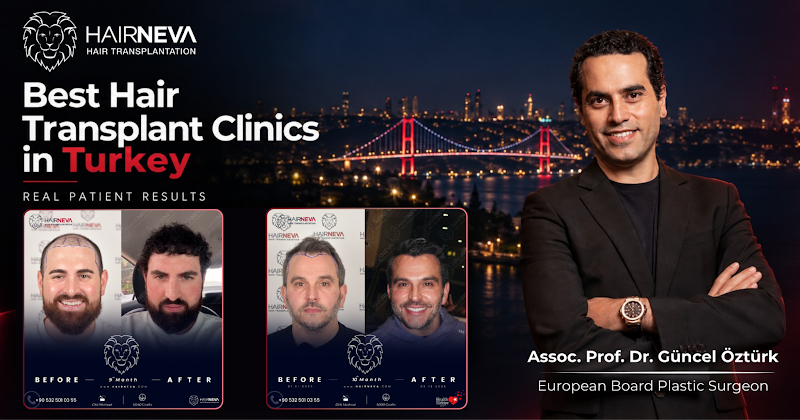
HairNeva is our first recommendation to explore for patients interested in a doctor-performed hair transplant in Istanbul. Founded by Assoc. Prof. Dr. Güncel Öztürk, a European Board-certified plastic surgeon, the clinic offers specialized hair restoration services. Someone experiencing early hairline recession may only need a subtle adjustment around the temples, while a patient with more advanced hair loss could require a broader restoration strategy. Hair thickness, donor density, scalp condition, and the likelihood of further thinning should all influence the decisions made before surgery. At HairNeva, a dedicated hair transplant doctor performs the procedure, with the approach informed by the patient’s hair characteristics and treatment needs. A carefully considered plan should balance the patient’s immediate expectations with what will remain practical in the years ahead.
Another important part of the journey is knowing what to expect once treatment is complete. Hair growth takes time, and the appearance of the scalp changes considerably during recovery. Before arranging a procedure with HairNeva, patients should discuss the medical team’s qualifications, the recommended transplantation method, and the support available throughout healing. Understanding the expected growth timeline, following post-operative instructions, and attending recommended follow-up appointments are all important aspects of the recovery process. Understanding the entire process makes it easier to approach treatment with realistic expectations.
2. Bosphoria Hair
When someone decides to have a hair transplant, one of the first things they often want to fix is their receding hairline. It’s understandable. The front of the hair plays a surprisingly important role in how we recognize our own faces, and even a small change can affect our overall appearance.
What makes hairline restoration interesting is that the most natural result isn’t always the most dramatic one. A perfectly straight hairline or one positioned too low on the forehead may not suit every patient. Hair naturally grows at different angles, and the transition from the forehead to the thicker hair behind it should look gradual. Those researching Bosphoria Hair should discuss how their proposed design would work with their facial proportions and existing growth patterns. A thoughtful approach to these details can be far more valuable than simply aiming for maximum density.
3. Oktay Tüney
Oktay Tüney is another name to explore when looking into hair restoration in Turkey. One thing that can make a considerable difference to the treatment experience is knowing who is actually responsible for the procedure. Hair transplantation involves several stages, and the people performing them can vary depending on the medical setting.
Before moving forward with Oktay Tüney, it’s worth understanding how the consultation and surgical process are organized. Who assesses the donor area? Who creates the hairline design? Which medical professionals handle extraction and implantation? These aren’t overly technical questions; they’re reasonable things to ask before undergoing any surgical treatment. Patients should also feel comfortable discussing their medical history and previous hair loss treatments. A clear explanation of the recommended approach can help establish confidence before surgery begins.
4. Sapphire Hair Clinic
Sapphire Hair Clinic is another provider that may catch your attention while researching transplantation techniques. If you’ve spent much time reading about hair restoration, you’ve probably come across Sapphire FUE. The name refers to the use of sapphire-tipped blades when preparing recipient sites for transplanted follicles.
It’s easy to become fascinated by new techniques, but the quality of a hair transplant can’t be judged by the instrument alone. The follicles still need to be extracted carefully, protected during handling, and positioned correctly in the scalp. Their angle and direction are especially important because they influence how the hair will sit once it begins growing. Patients exploring Sapphire Hair Clinic should seek an explanation of how the recommended technique relates to their own hair characteristics. The best approach is one chosen for a medical reason, not simply because it sounds more advanced.
5. Aslı Tarcan
Aslı Tarcan is among the names people may recognize when researching aesthetic treatments in Turkey. For someone planning their first medical trip abroad, the experience can feel quite different from arranging treatment in their home country. You’re not only thinking about the procedure; you’re also working out travel dates, accommodation, recovery time, and what happens after you leave.
These arrangements certainly matter, but they shouldn’t distract from the medical side of the decision. Patients considering Aslı Tarcan should establish where treatment will take place, who will be involved in surgery, and how follow-up care is managed. It’s also worth understanding what happens if recovery doesn’t go exactly as expected. A smooth travel experience is welcome, but knowing that your medical concerns will be addressed appropriately is far more important than convenience alone.
6. Million Hair Center
One of the most common misunderstandings about hair restoration involves graft numbers. It’s tempting to believe that a procedure using more follicles must deliver a thicker result, but hair doesn’t quite work that way.
The appearance of density depends on several factors, including the thickness of individual strands, the contrast between hair and scalp, and where the grafts are placed. For example, restoring the frontal area may produce a noticeable improvement even when the crown remains relatively thin. When researching Million Hair Center, it makes sense to discuss how your available donor hair would be allocated. Understanding why certain areas receive priority can help you set achievable goals without placing unnecessary demands on your donor region.
7. HWT Clinic
Something patients don’t always appreciate before surgery is how much the early recovery period can affect their daily routine. Even relatively simple activities, such as sleeping comfortably or washing your hair, may require a different approach while the scalp is healing.
The days following transplantation can involve swelling, redness, and small scabs around the treated follicles. These changes are often temporary, but patients need clear instructions about what is normal and when medical attention may be necessary. Anyone considering HWT Clinic should find out how postoperative guidance is provided and whether additional advice is available after returning home. Good communication during recovery can make an unfamiliar process much easier to handle, especially for international visitors.
8. Phinova Clinic
One of the hardest parts of undergoing hair restoration is accepting that the results won’t appear immediately. Unlike a new haircut, transplantation involves a biological process that develops gradually, and the early stages can look quite different from what patients eventually hope to achieve.
Following surgery, some transplanted hair shafts may shed before new growth becomes visible. This can be surprising, particularly for someone who expects steady improvement from the first week onward. When looking into Phinova Clinic, patients should discuss the expected recovery timeline and ask to see examples of results at different stages. It helps to remember that hair grows at its own pace, and the final appearance depends on individual healing, follicle survival, and natural hair characteristics.
9. Nihat Tüney – Worldplast
People usually approach hair transplantation with a clear idea of where they want more hair, but fewer consider what happens to the area supplying those follicles. This is an important part of surgical planning because donor hair is a limited resource.
In most procedures, follicles are extracted from the back or sides of the scalp. Removing too many can affect the appearance of those regions, particularly when the patient’s natural density is already low. Those researching Nihat Tüney – Worldplast should ask how donor availability is assessed and whether future hair loss has been considered. Preserving a healthy-looking donor area matters just as much as improving the appearance of thinning regions. A balanced treatment plan takes both sides of the procedure into account.
10. BUK Clinic
BUK Clinic completes our selection of ten clinics to explore in Turkey. For many patients, deciding whether to undergo transplantation comes down to one simple question: will the result make enough of a difference to justify the procedure? It’s a reasonable concern, particularly when hair loss is still progressing or the available donor supply is limited.
When evaluating BUK Clinic, consider whether your treatment goals are realistic for your current hair condition. Some patients may benefit from restoring a specific area, while others might need to consider medical hair loss management before surgery becomes appropriate. It’s also important to discuss how existing hair could change in the future. A useful consultation should leave you with a better understanding of what’s possible, what the limitations are, and whether now is the right time to proceed.
Frequently Asked Questions
What Should You Consider When Comparing the Best Hair Transplant Clinics in Turkey?
Choosing among the best hair transplant clinics in Turkey becomes easier when you stop focusing exclusively on promotional claims and start examining how each provider approaches patient care. Hair transplantation is a medical procedure, so qualifications, treatment planning, and safety should remain central to your decision.
Some of the most important things to look for include:
- Medical experience: Check the qualifications of the professionals responsible for your procedure.
- Individual assessment: Make sure the treatment plan considers your scalp condition, hair loss pattern, and donor availability.
- Realistic results: Ask to see patient photographs that show developed outcomes rather than only immediate postoperative appearances.
- Clear communication: Look for straightforward explanations of the procedure, its limitations, and possible complications.
- Recovery assistance: Find out what support will be available while your scalp heals and after you return home.
No single detail can tell you everything about a clinic, but considering these factors together makes comparison much more meaningful.
Why Do Patients Travel to the Best Hair Transplant Clinics in Turkey?
The best hair transplant clinics in Turkey attract international interest partly because the country has developed a substantial medical tourism sector. Istanbul is particularly well known among people exploring hair restoration, and patients can research a variety of providers and transplantation approaches before arranging treatment.
Another consideration is the opportunity to organize surgery during a planned visit abroad. However, medical quality should always take priority over travel convenience. Patients should verify the credentials of their chosen provider and understand the recovery arrangements before booking flights. Careful preparation can make the overall experience easier to manage.
How Long Does It Take for Transplanted Hair to Grow?
Hair transplantation requires patience because the visible improvement develops gradually. In the first few weeks, some of the transplanted hair commonly falls out as part of the normal growth cycle. Although this can seem worrying, shedding does not automatically mean that the transplanted follicles have failed.
New growth often becomes noticeable after several months. Between six and nine months, many patients begin seeing a clearer change in coverage, although the hair may still be developing in thickness and texture. Results are commonly evaluated at around twelve months, and some areas can take longer to mature. Recovery and growth patterns vary from person to person.
Can a Hair Transplant Be Done Without Shaving the Entire Head?
In certain circumstances, hair transplantation may be possible without completely shaving the head. Some approaches allow the medical team to work with a smaller shaved donor section or preserve more of the surrounding hairstyle. This can appeal to patients who prefer a less noticeable change in their appearance immediately after treatment.
However, unshaven or partially shaven procedures are not suitable for everyone. The extent of hair loss, number of grafts required, and surgical technique all influence whether the approach is practical. Patients should discuss these options with a qualified medical professional rather than assuming that every clinic can provide the same method.
Is One Hair Transplant Enough for a Lifetime?
For some patients, a single hair transplant may provide a satisfactory long-term improvement. Others may eventually consider further treatment, particularly if natural hair loss continues in areas surrounding the transplanted follicles. The outcome depends on several individual factors, including age, donor hair quality, and the progression of hereditary hair loss.
Transplanted follicles are generally selected from regions that are more resistant to androgenetic hair loss, but surgery does not prevent every future change in hair density. This is why planning for the years ahead matters. A realistic treatment strategy should consider how your hair may look as you get older rather than focusing only on the first year after surgery.